The sine-rule and the cosine-rule for general triangles
Can the sine, cosine and tangent also be applied to general triangles? Yes, but the formulas are more complicated. Let us briefly discuss those formulas.
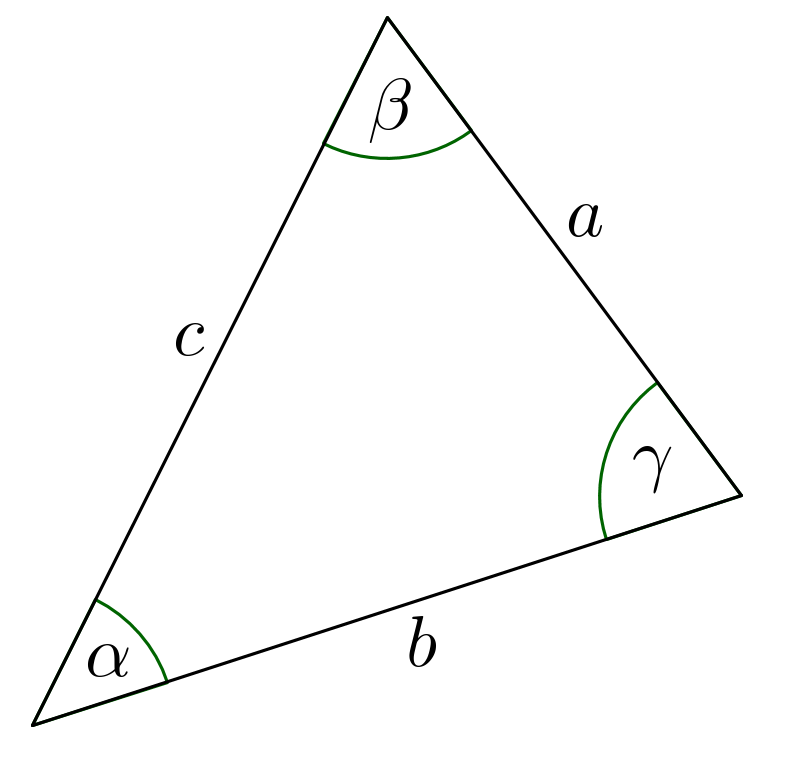
Consider a general triangle, e.g. the one below. Note that we labelled sides and angles such that side is opposite of angle , side is opposite of , and side is opposite of angle . This is important for the formulas below to work.
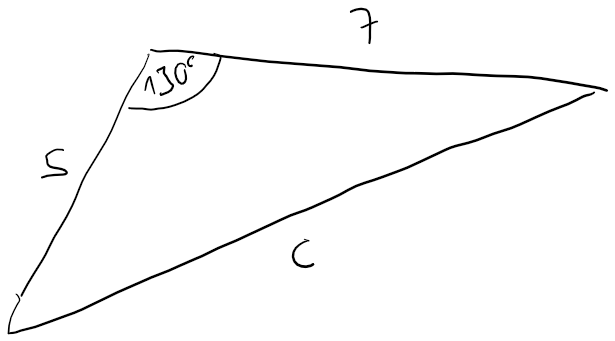
Determine side length and the angles and in the triangle below.
Solution
First : Using the cosine rule, we get
Thus, we have . To find the angles, we can apply the sine-rule:
It follows
and thus
Finally, we have
You can think of the cosine-rules as a kind of generalised Pythagoras, where a "correction term" has to be subtracted because we are not dealing with a right-angled triangle. In fact, if for example , then we get indeed the theorem of Pythagoras
It is important to realise that we do not really use those laws, as we could always divide the general triangle in two right-angled triangles, as we already done many time in the previous sections. However, these laws offer some shortcuts, and calculations are quicker.
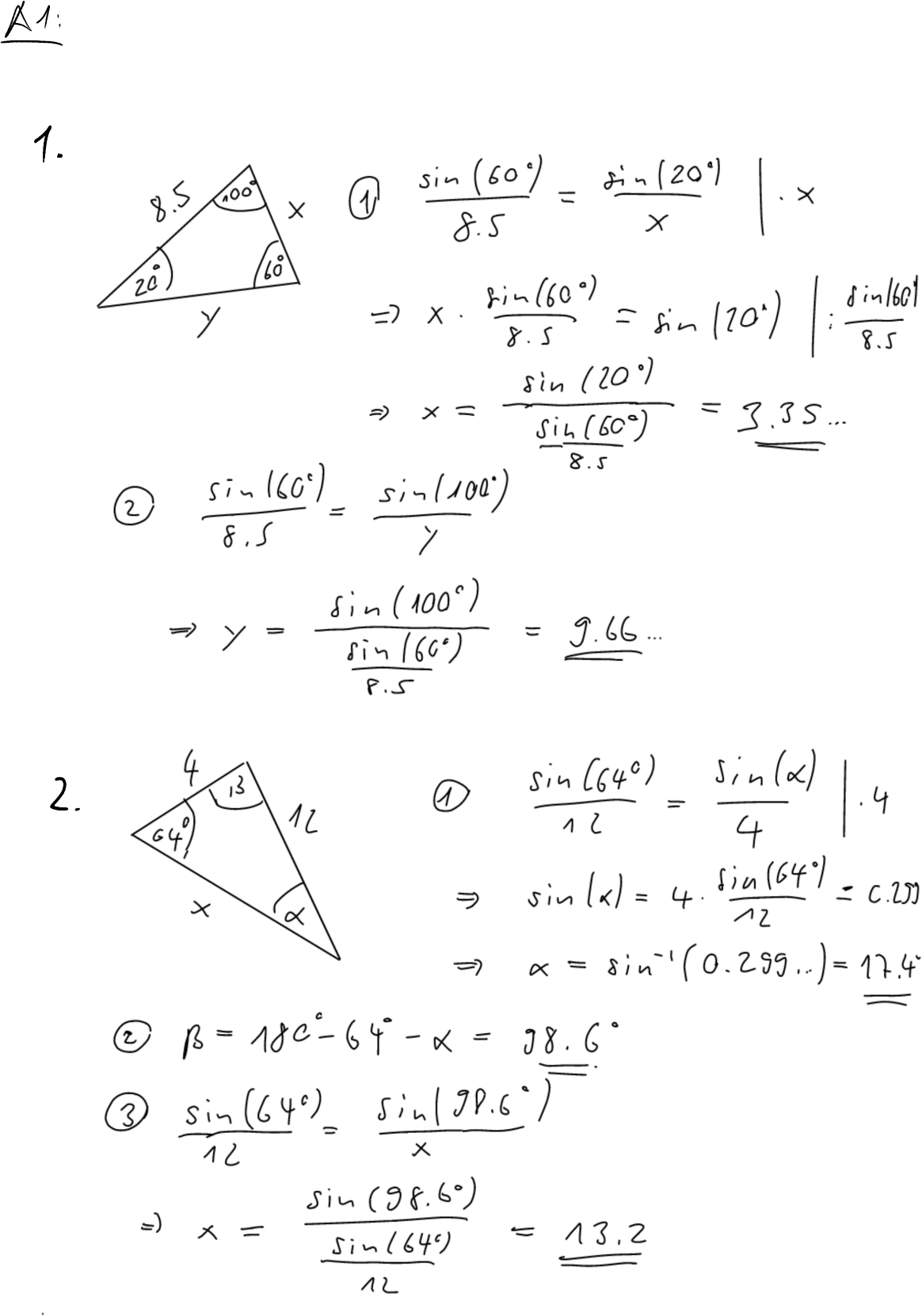
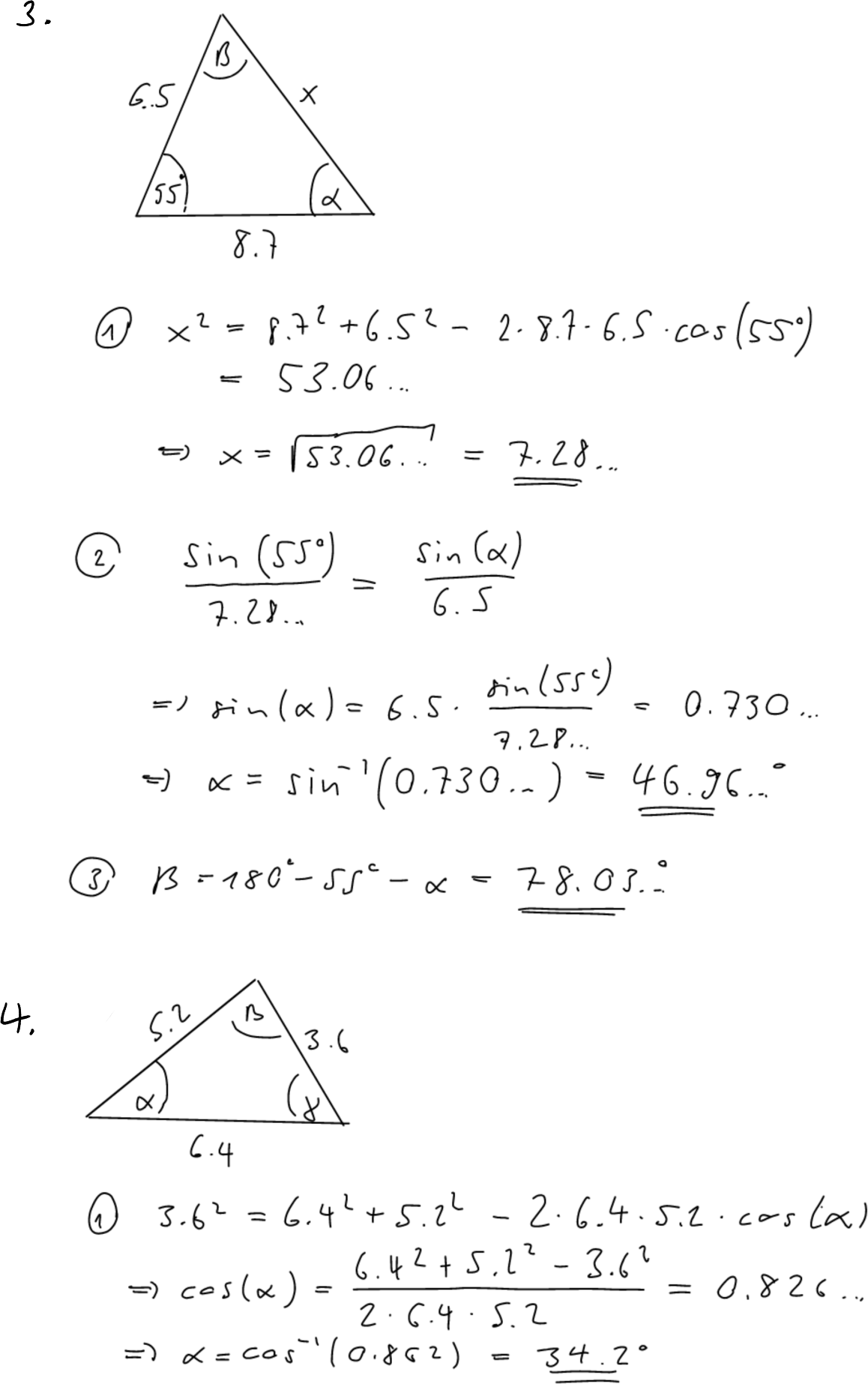
Q1
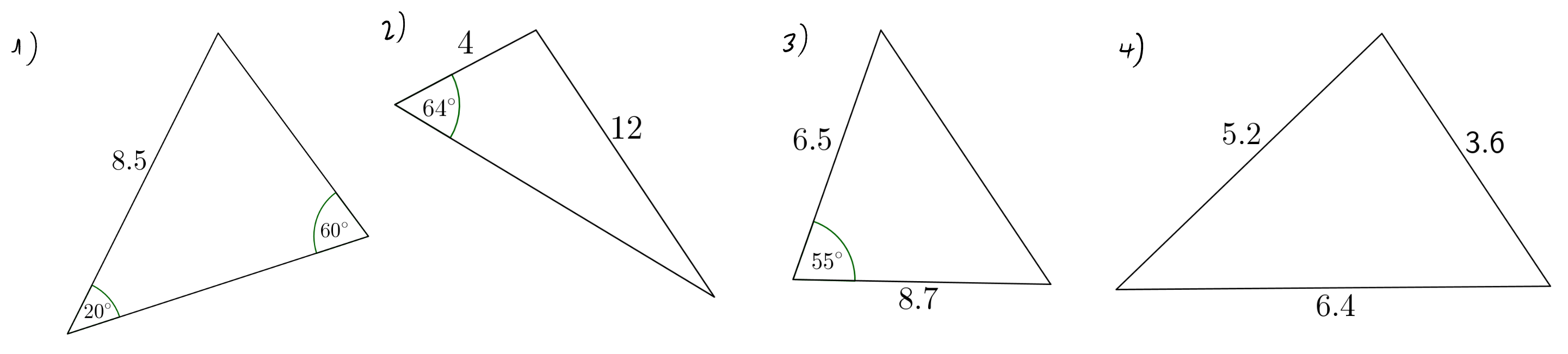
Consider the general triangles shown below. Find the missing angles and side lengths using the sine-rule or the cosine-rule. You might have to try out which of those two rules work better for each problem.
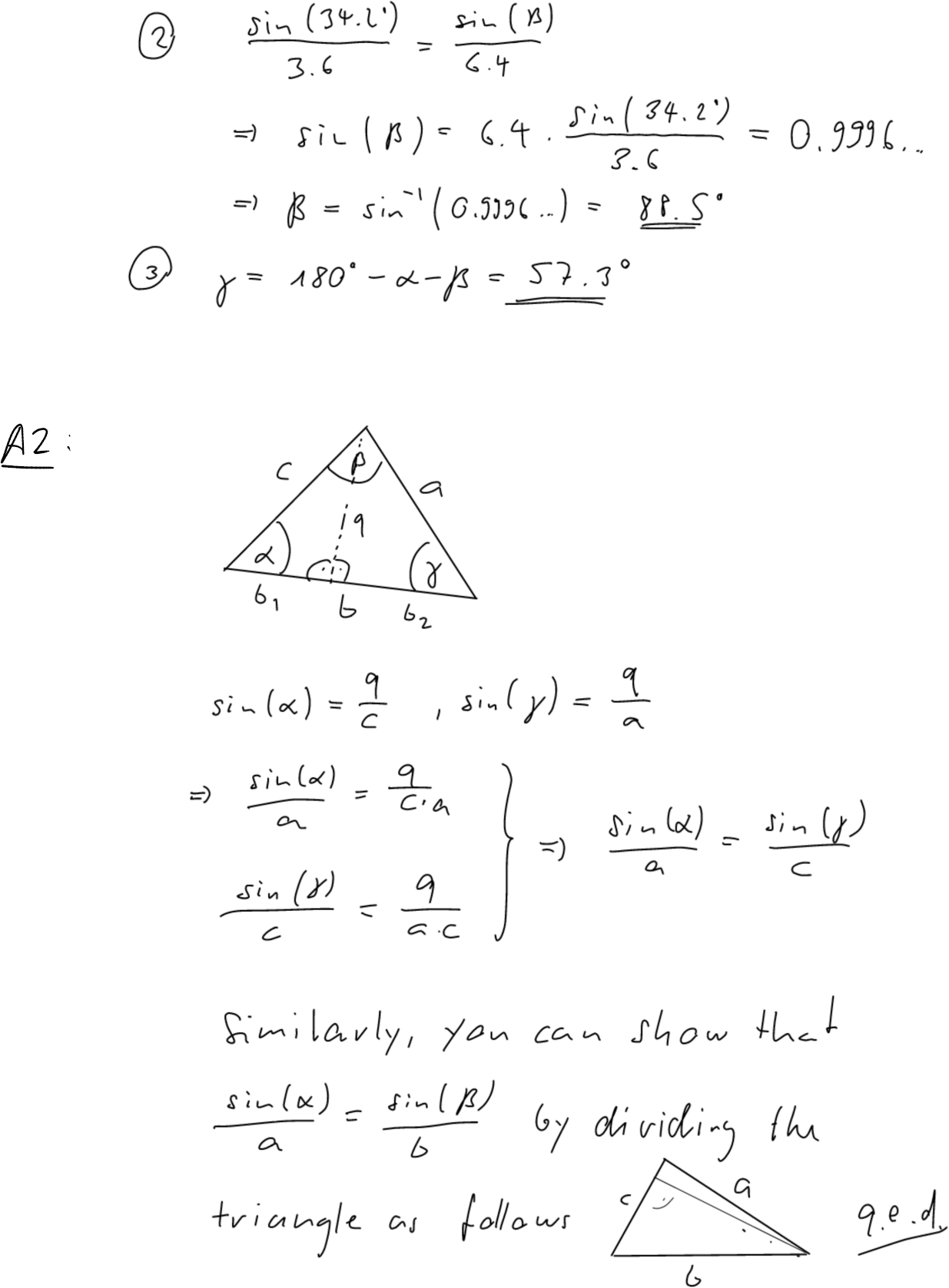
Q2*
Proof the sine-law by dividing the general triangle into two right-angled triangles.
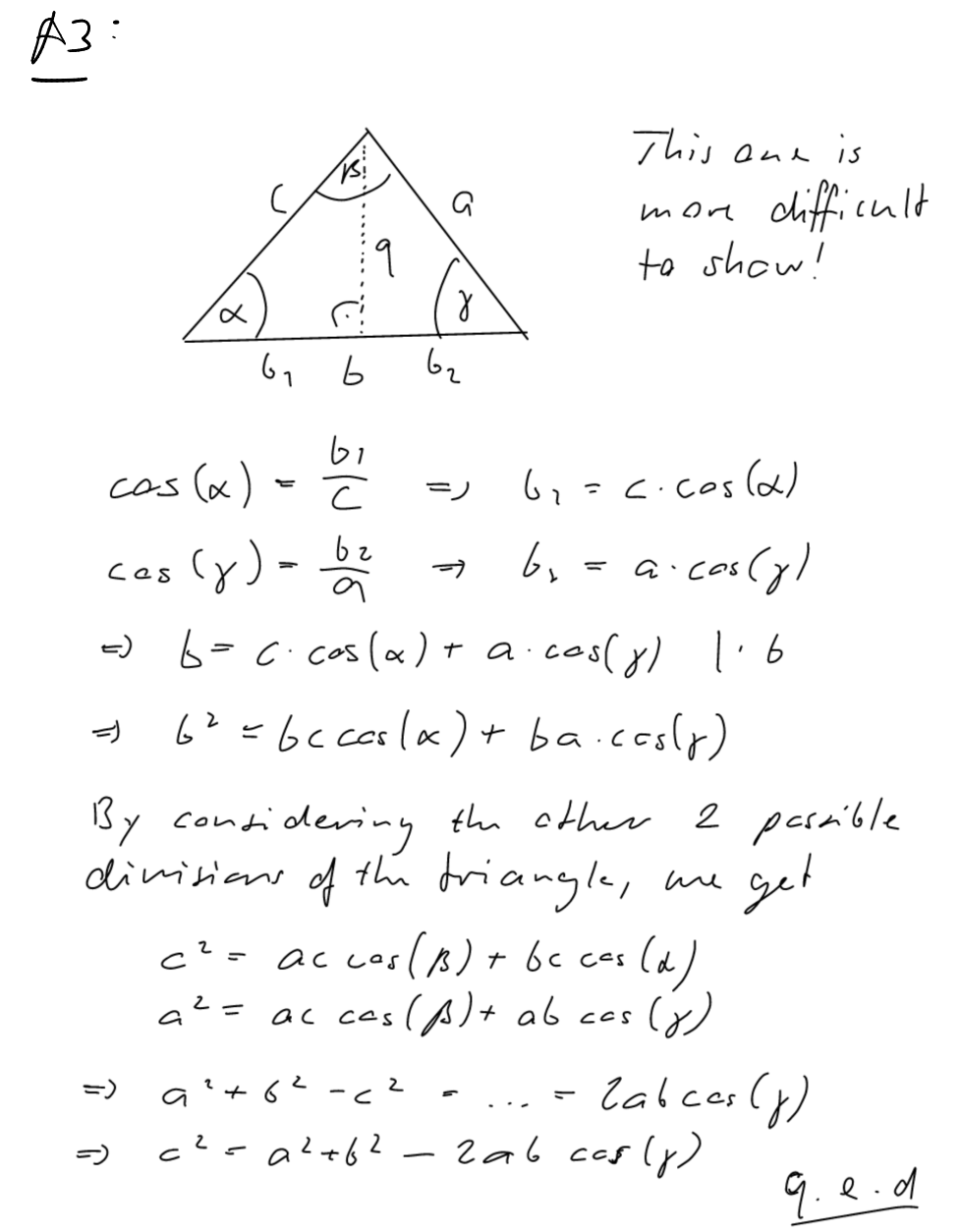
Q3*
Proof the cosine-law by dividing the general triangle into two right-angled triangles.
Solution