The triangle of Pascal
Pascal's triangle has may applications. Here we discuss only a view of them. Let's start with a familiar problem:
Expand the following expressions (called binoms):
Solution
-
It is
-
It is
So, what about or even . The calculations will become longer and longer. However, there is a shortcut, offered by Pascal's triangle. So let's first introduce this triangle (see figure below):
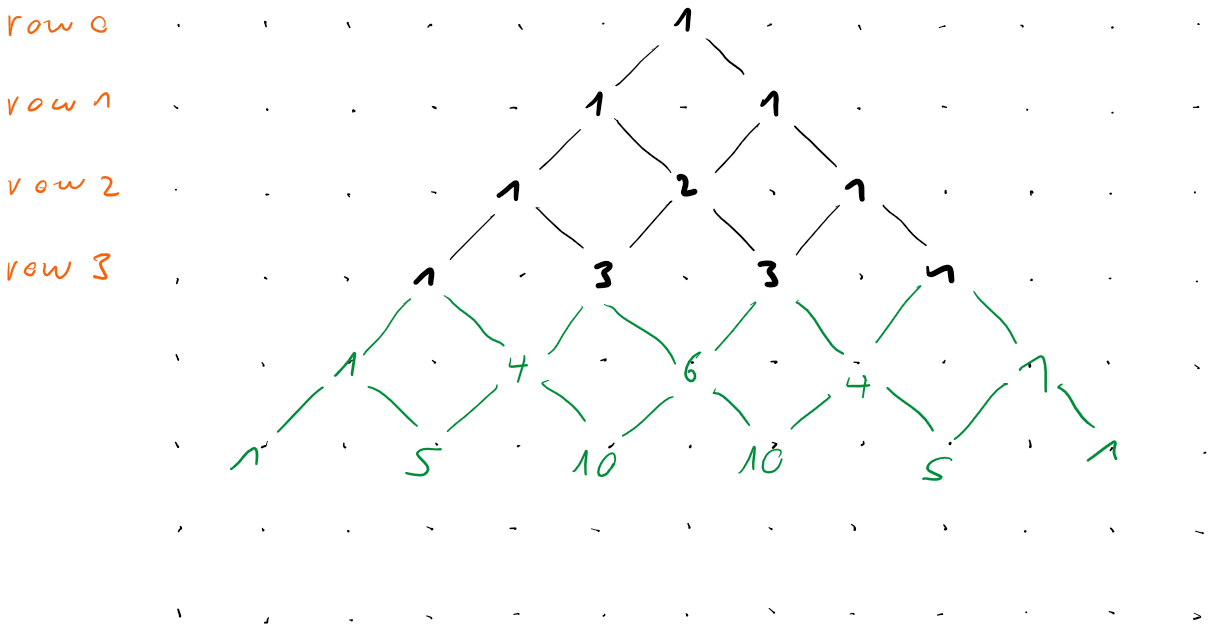
At the top of the triangle is a , and each row also starts and ends with a . In row 2, the middle number is obtained by adding the upper two numbers connected to it, that is . The same is done for every other row. In this way we can fill the triangle with numbers as we move downwards row by row.
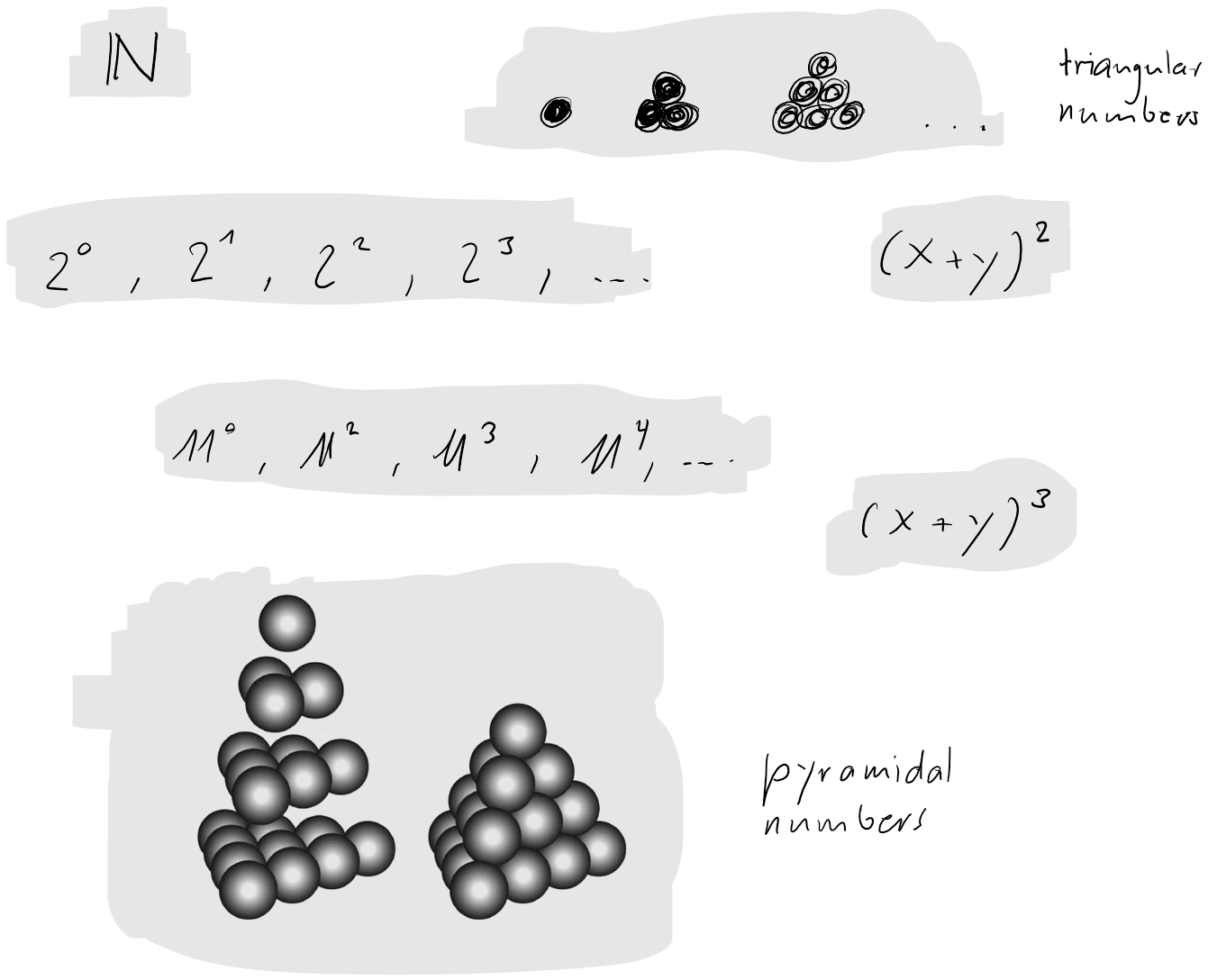
Pascal's triangle contains many interesting number patterns. Can you spot some of them? Have a look at the following exercise:
Where are these number patterns found in Pascal's triangle?
Returning back to the original problem, notice that the numbers in row in the triangle are the coefficients of the expansion of , and the numbers in row three are the coefficient of the expansion of :
It turns out that this is also true for the other rows.The coefficients of can be found in the fourth row:
Also note how the powers change:
or simplified
The highest power is , and reduces its power by and adds the power by if we move from right to left.
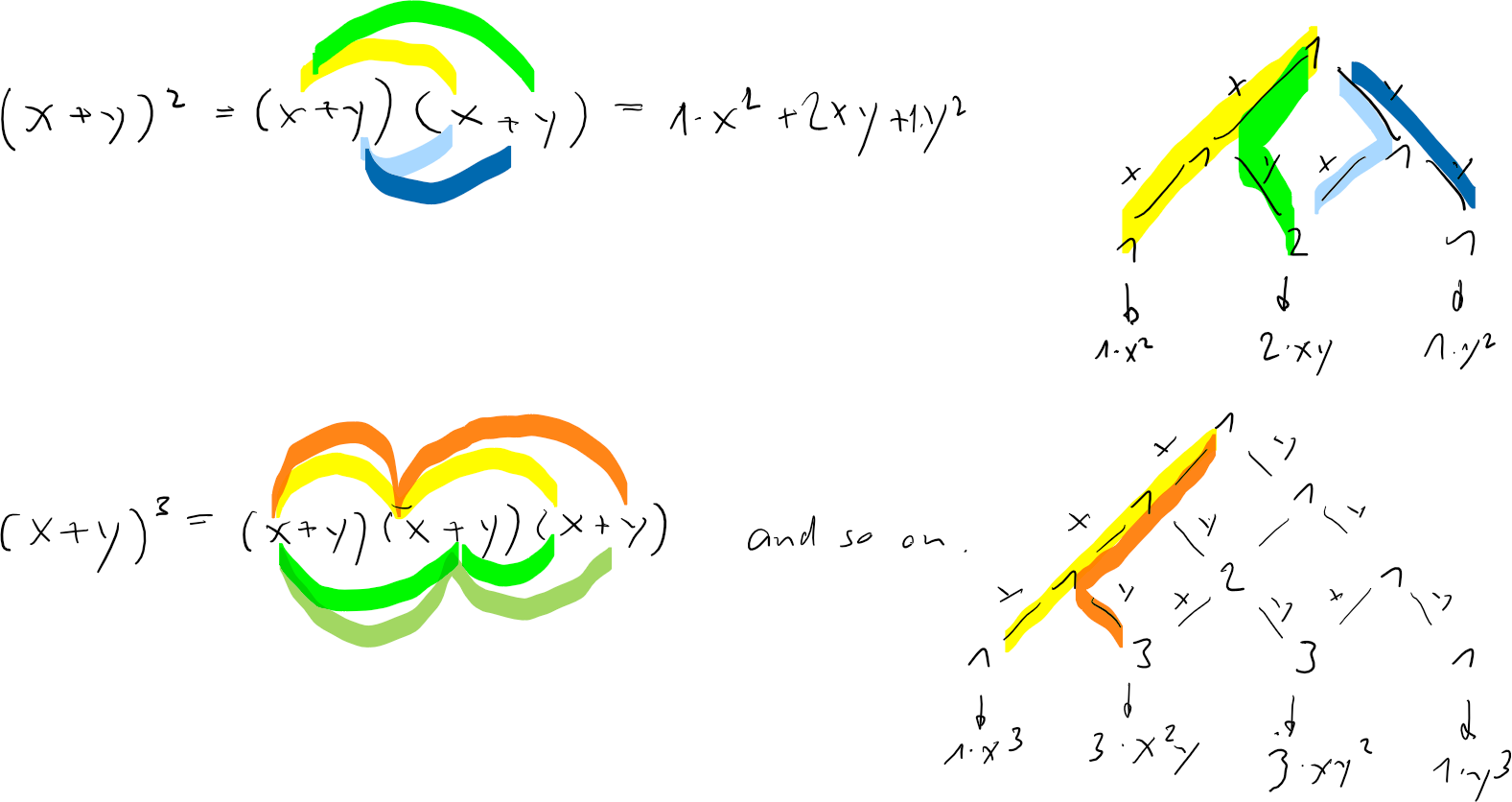
To understand the pattern a bit better, we can label the lines with and , and moving along a path corresponds to multiplying the variables we encounter along the way:
Expand the following binoms: